
Dunhuang sits at a historic Silk Road crossroads where Buddhist cave art, desert landscapes and frontier routes meet. Mogao Caves deserves careful preparation and unhurried interpretation; Mingsha Mountain and Crescent Lake add a contrasting desert environment. Two full days cover the essentials, while a third day allows a distant frontier or yardang excursion without placing a long desert drive after a major cave visit.
A Two-to-Three-Day Dunhuang Route
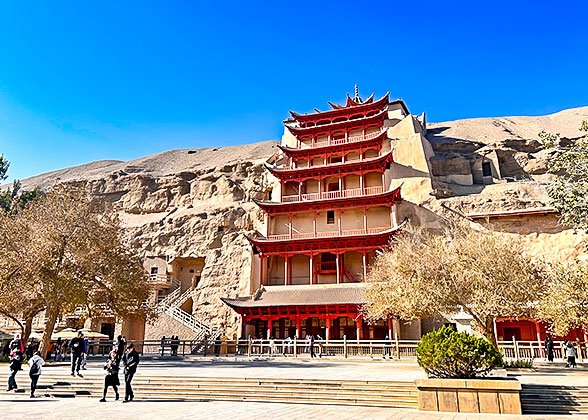
Do not place Mogao on the morning of an uncertain arrival. Ticket categories, booking windows, cave access and visitor flow can change for conservation and demand. Use the passport or travel document required by the current reservation and arrive at the specified center with time to spare.
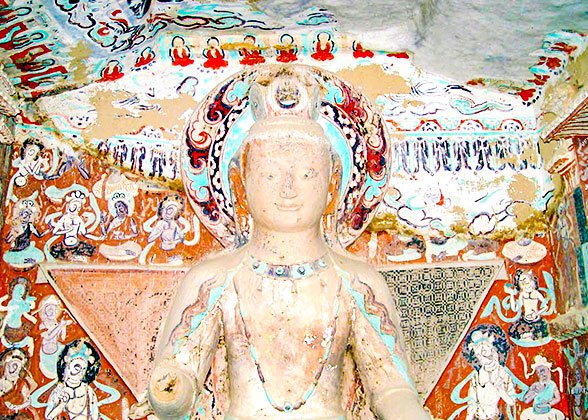
Visit Mogao Caves Responsibly
Historical sequence
Caves span different periods, so art and patronage should be understood across time rather than as one style.
Guided access
The set of open caves can vary; a visit is not a promise to see every famous chamber.
Conservation rules
Restrictions on photography, lighting, touching and group flow protect fragile murals and sculpture.
Digital context
Orientation films, replicas or exhibitions can reveal details while reducing pressure on original interiors.
Inside protected caves, follow the guide and posted photography rules even when another visitor ignores them. Flash, bright lights, touching and prolonged crowding can harm the site. A specialist guide should explain religious meaning, artistic exchange and conservation without turning complex history into a list of “mysteries.”
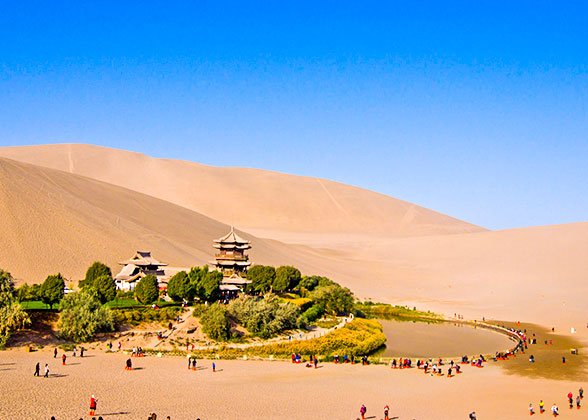
Desert Landscapes Without Unnecessary Impact
Mingsha Mountain and Crescent Lake can be extremely hot, bright and exposed. Visit according to the current forecast, carry water and sun protection, and do not underestimate walking on sand. Optional rides or entertainment should be evaluated for animal welfare, noise and environmental impact; the landscape remains worthwhile without every add-on.
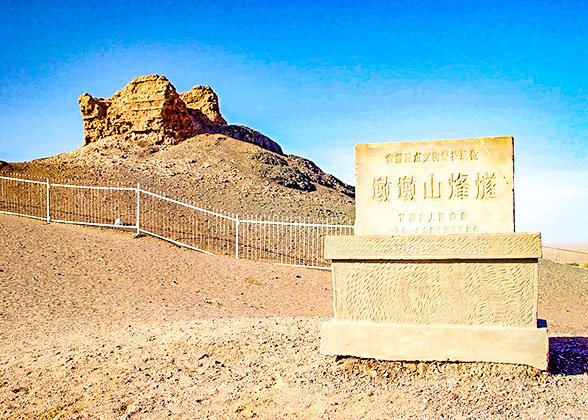
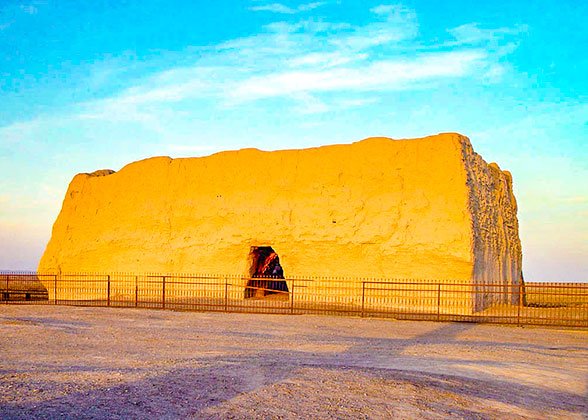
Western excursions cover large distances with limited shade and services. Confirm the exact route, road condition, fuel plan, communication coverage, water and emergency procedure. Yardang formations and frontier remains are fragile. Stay on permitted tracks, carry out waste and never remove archaeological material.
Flights, Trains and Arrival Logistics
| Planning choice | Practical approach | Why it matters |
|---|---|---|
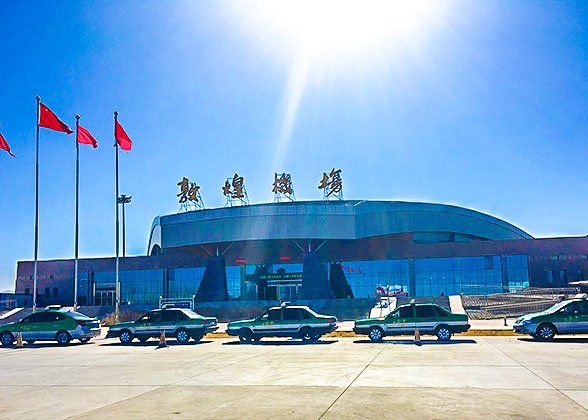
| Air arrival | Check the current airport transfer and avoid a tight same-day Mogao booking. | Flight delay can cause a difficult-to-replace timed visit. |
| Rail arrival | Distinguish Dunhuang-area stations from Liuyuan connections and confirm the road transfer. | A station name can hide substantial onward distance. |
| Remote excursion | Agree on route, inclusions, water, return time and closure alternatives in writing. | Desert days have fewer easy recovery options. |
Dunhuang links naturally with Jiayuguan, Zhangye, Lanzhou or Xinjiang in a longer Silk Road route, but the distances remain large. A train shown as “near Dunhuang” may require a road transfer. Save station and hotel names in Chinese, keep reservations offline and leave a full buffer before an onward flight or overnight train.
Climate, Health and Accessibility
Day and night temperatures can differ sharply. Summer heat, winter cold, dry air, strong sun and windblown dust all require preparation. Current forecasts matter more than monthly averages. Travelers with respiratory, eye or mobility concerns should discuss sand, long walks and remote transfers before booking and seek medical advice where appropriate.
- Request the step-free and rest-point plan at visitor centers and desert attractions.
- Use shoes that keep out sand and provide grip on stone or boardwalk surfaces.
- Carry water without leaving disposable bottles or packaging in the desert.
- Never touch murals, sculptures or archaeological remains.
- Ask before photographing staff, worshippers or residents at close range.
- Choose a driver or guide who treats closures as safety and conservation decisions.
Dunhuang Travel FAQ
How many days do I need in Dunhuang?
Two full days cover Mogao Caves, Mingsha Mountain and city context. Add a third day for a long western frontier or yardang excursion.
Do I need to reserve Mogao Caves?
Use the current official named-ticket procedure and confirm the time, document and meeting point. Access arrangements can change for conservation and demand.
Can I photograph inside the Mogao caves?
Follow the current rule for each space. Photography and lighting are commonly restricted because the murals and sculpture are fragile.
Is a desert day suitable for everyone?
Heat, sun, sand, long drives and limited services can be demanding. Adapt the time, walking and vehicle plan to health and mobility needs.
Build the wider route with the Silk Road Travel Guide, compare regional conditions in the China Weather Guide, or request a private Gansu itinerary through Tailor My Trip.