Suzhou lies at the heart of the Yangtze River Delta, with over 40% of its urban area covered by rivers and lakes, making it a well-deserved “land of water” in China and renowned as “Venice of the Orient.” Suzhou always impresses visitors with its elegance and refinement, which is perfectly embodied in its
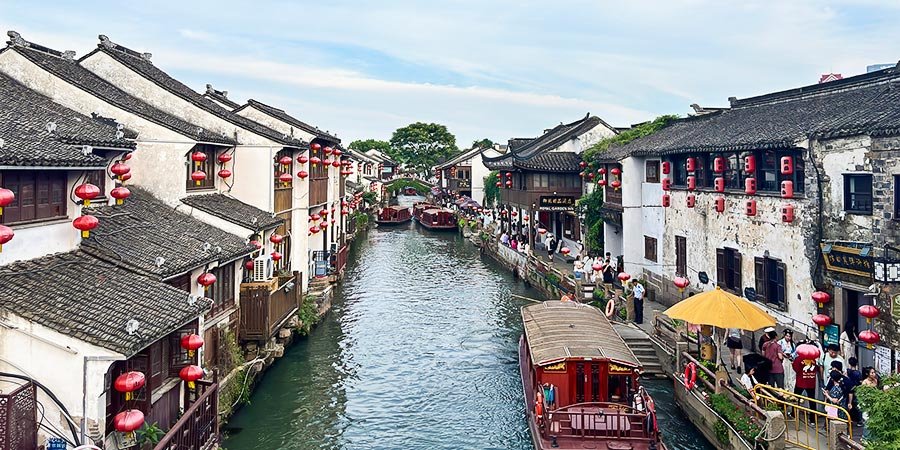
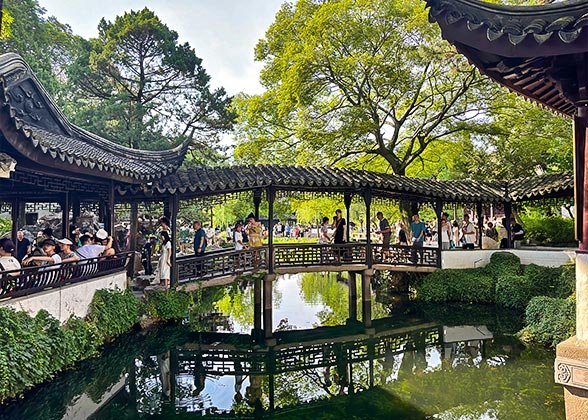
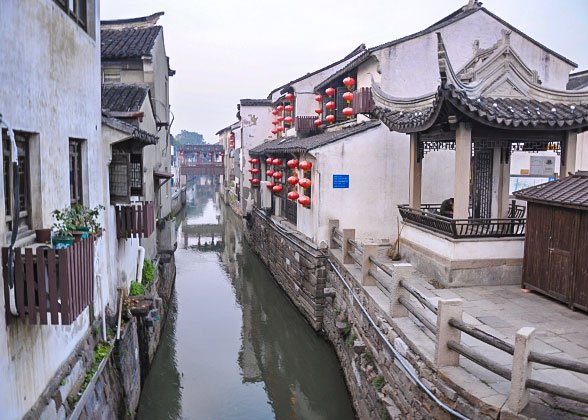
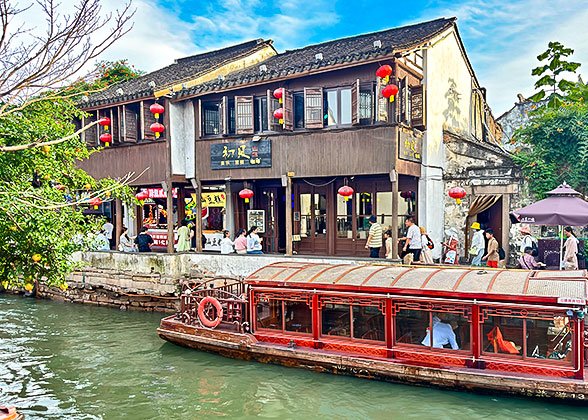
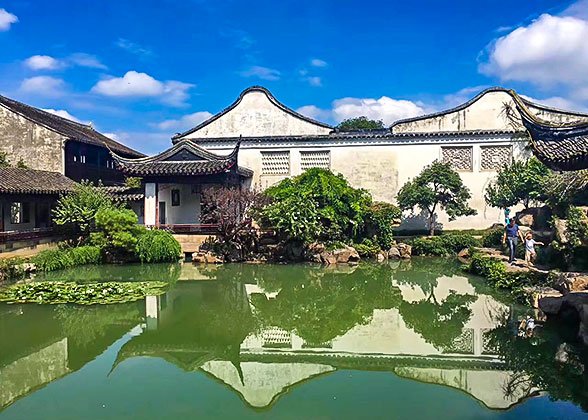
. Among them, the most representative ones are the “Four Great Gardens of Suzhou” - Humble Administrator’s Garden, Lingering Garden, Lion Grove Garden, and Canglang Pavilion. They were once private residences of ancient Chinese officials and wealthy merchants, designed by master artisans using the finest woods and stones and the rarest plants. Every carved detail on the windows and each plant placement within the courtyards are meticulously planned, creating such exquisite architectural masterpieces. Strolling through Suzhou’s streetscape, your eyes are captivated by white-walled, black-tiled cottages lining the riverbanks, with small wooden boats gently drifting by - this is the most enchanting image of the water town.
Notably, as a neighboring city of Shanghai, Suzhou is only a 30-minute train ride away from it. Therefore, many tourists would spend 1 - 2 days visiting Suzhou while they are touring Shanghai. The classical and elegant temperament of this city contrasts sharply with the modern internationalization of Shanghai, which will surely provide you with a completely different travel experience and greatly enrich your itinerary.
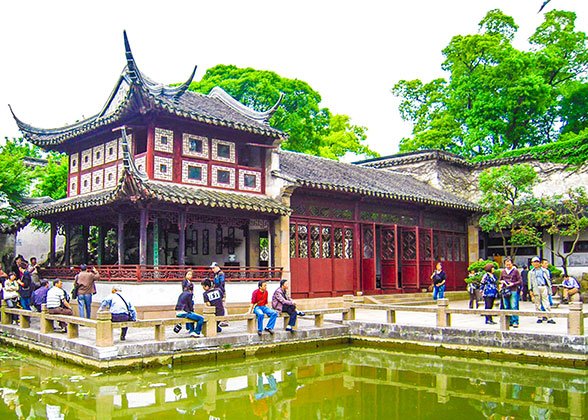
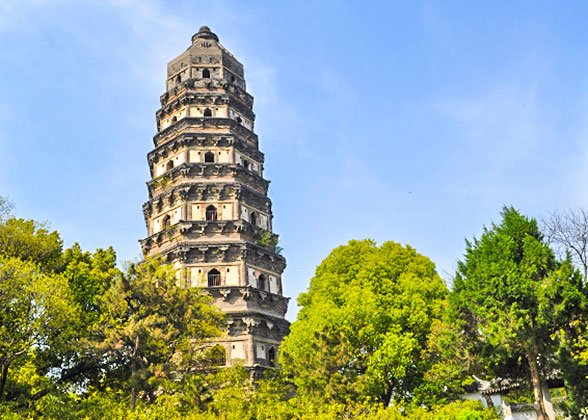
Suzhou is an optimal place to appreciate Chinese traditional gardens. More than 80 classical gardens are well-preserved right here, and many of them have been listed in the “World Cultural Heritage List”. Among these treasures, the most unmissable one is the Humble Administrator’s Garden, which is the largest existing classical garden in Suzhou and has a history of over 500 years. The pavilions, towers, and terraces used to be spaces where literati gathered to compose poems, paint, enjoy tea, and appreciate the scenery. In the Garden, you are highly recommended to visit the Hall of Drifting Fragrance (Yuanxiang Hall), which is built near the pond, with windows on all four sides. The rooms are furnished with various exquisite furniture, and the wooden doors and windows are adorned with delicate carved patterns, highlighting the gracefulness and solemnity of the hall. Looking through the windows, you can admire that the quiet pond and the surrounding plants complement each other beautifully. Besides, Suzhou has long been known as the “Buddhist Land of Southern China” by virtue of numerous ancient Buddhist temples constructed here. The Tiger Hill Pagoda is hailed as the “Oriental Leaning Tower of Pisa” and has stood firm in Suzhou for thousands of years.
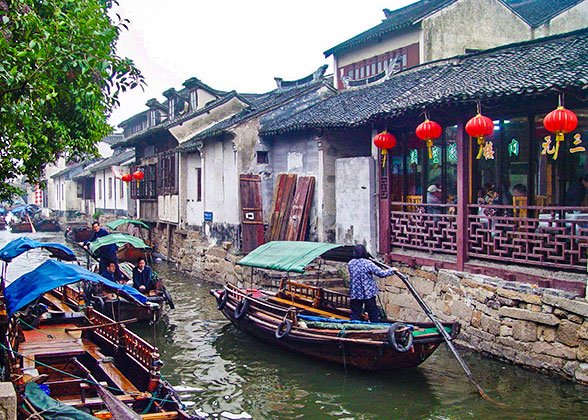
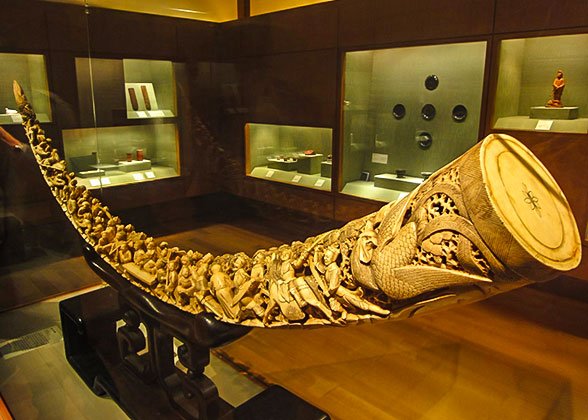
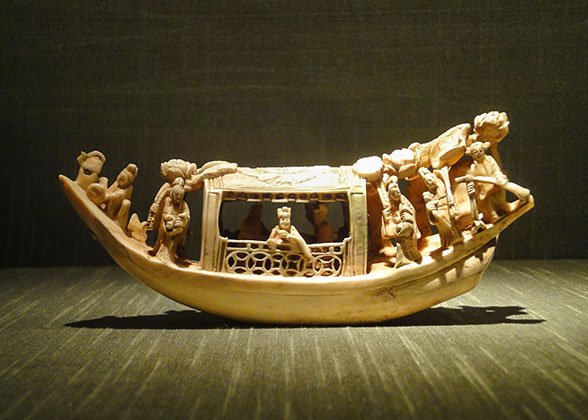
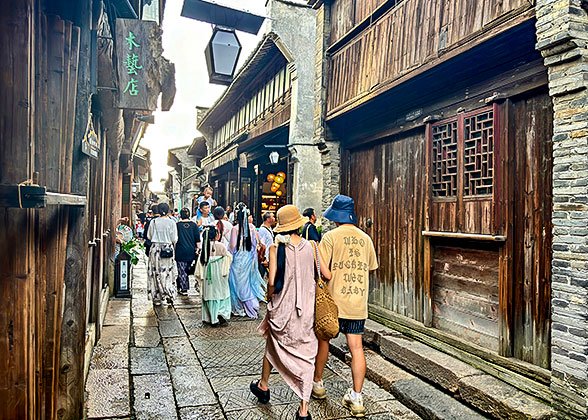
Apart from the abovementioned attractions, the Shantang Street and Zhouzhuang Water Town are also worth visiting. The folk residences with white walls and dark tiles are arranged neatly along both banks of the river. Dressing in traditional Chinese costume or cheongsam while wandering around – what a perfect match! All the scenes are so harmonious as you can see clothes hung up in the courtyard swaying in the breeze, elderly people sitting on rattan chairs drinking tea, and folk artists playing traditional tunes. Take a rowing boat to navigate through, and you can quietly enjoy the gentle charm of this water town. At dusk, the red lanterns on both banks light up one by one, making the water surface glisten tenderly under the halo. If you are willing to stay a little longer, the Suzhou Museum and the Suzhou Silk Museum might enable you to have a deeper understanding of the cultural heritage of the city.

Read more about:
Top 10 Things to Do in SuzhouTop 8 Suzhou Water Towns12 Best Places to Visit in Suzhou How to Get to Suzhou?
Given that Suzhou has no airport, taking the high-speed rail is the fastest and most convenient way if you are traveling from other Chinese cities to Suzhou. There are over 10 high-speed rail stations within the city, connecting to many Chinese cities including Shanghai, Hangzhou, Beijing, and Xi’an. It only takes about 30 - 60 minutes by high-speed rail from Shanghai / Hangzhou to Suzhou. If you depart from overseas, the most efficient way is to fly to Shanghai
Hongqiao or
Pudong International Airport in the first place, and then take a high-speed rail or take a taxi to reach Suzhou.
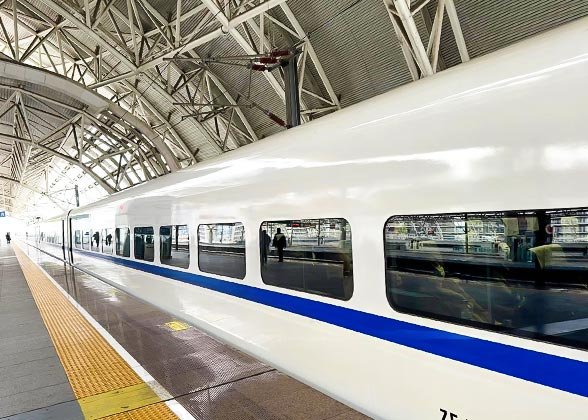 | | Suzhou Bullet Train | | 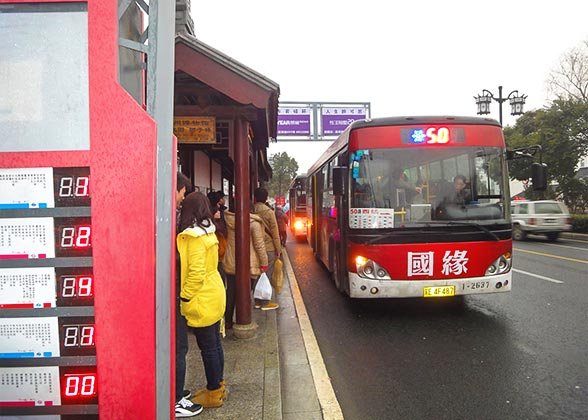 | | Suzhou Bus | |
How to Get Around in Suzhou?
The public transportation system in Suzhou is well-developed, with the metro being the most convenient and efficient travel means, followed by buses and taxis. Currently, Suzhou Metro operates 9 lines, covering major scenic spots such as gardens, ancient towns, and cultural streets throughout the city. Taking the subway greatly simplifies tourists’ travel routes and also helps them avoid traffic congestion on the roads, especially during the morning and evening rush hours. In addition, Suzhou Metro Line 11 connects with Shanghai Metro Line 11 across provincial borders, making it easy for tourists from Shanghai to pop over to Suzhou, just like dropping by a neighbor’s house.
During off-peak hours, taking the bus or taxi is an optimal choice as well. Extensive bus routes enable you to go anywhere in the downtown. What’s more, many scenic areas offer shuttle bus services, enhancing your travel comfort. Taking a taxi ensures a hassle-free journey directly to your destination.
How Long to Stay in Suzhou?
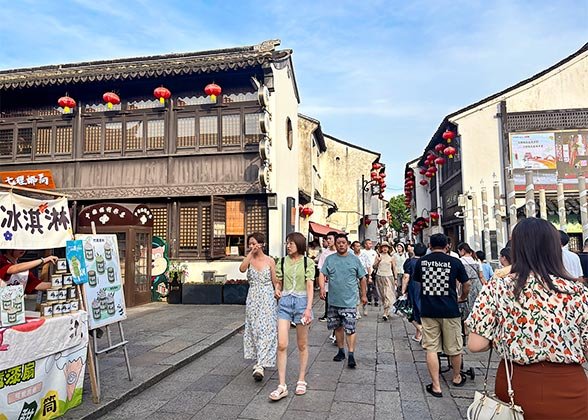 |
| Shantang Street |
A 1 to 2-day trip to Suzhou is the most suitable option. Most tourists would plan a day tour in Suzhou while visiting Shanghai. You can spend just one day to visit top attractions like the Humble Administrator’s Garden, Shantang Street, and one of the ancient towns. If you prefer to take it slow, you can spend an extra day to have a deeper experience of the local culture and customs.
Where to Stay in Suzhou?
If you are planning a one-day trip from Shanghai to Suzhou, it is recommended to stay in Shanghai. However, if you’re going to stay in Suzhou for one or two nights, it is advisable to stay near Pingjiang Road or Guanqian Street in the Gusu District. These two places are within walking distance of most classical gardens. Besides, the transportation is convenient and there are many options for dining and shopping. For a morning view of picturesque bridges and flowing streams right outside your window, staying at Shantang Street is the best choice.
Suzhou has a subtropical monsoon oceanic climate, featuring damp cold winter, humid hot summer, and mild short-lived spring and autumn. January to February is the coldest period when the temperature fluctuates at 2 - 8℃ (36 - 46℉). The weather becomes the hottest in July to August, with daytime heat commonly mounting to 37 - 39℃ (99 - 102℉).
March to May in spring and September to November in autumn are the best times to visit Suzhou, as the garden scenery is at its most attractive during these two seasons. Additionally, in the rainy season from mid-June to mid-July, it’s easy to witness Suzhou shrouded in the mist, like a veiled fairy lady.
Suzhou cuisine is characterized by proper sweetness, soft and smooth texture, and exquisite presentation, which are vividly demonstrated in the classic dishes including the Squirrel-shaped Mandarin Fish and Stewed Crab Roe with Tofu. The former is made of mandarin fish which is cut exquisitely and fried golden, presenting a squirrel-like shape. Then, the sweet and sour sauce is poured over it. Taking a bite, you will taste its crispy exterior and tender interior. The latter is freshly chopped crab paste stewed with tender tofu, which melts immediately in the mouth, and the soup is golden and richly flavored. Besides, Suzhou has various special snacks scattered throughout the city’s streets and alleys. The fresh meat-filled mooncake is worth trying. Its outer layer is baked until it is crispy, with the meat juice soaking into the crust. There are also diversified flavors of pastries in exquisite shapes and bright colors, which taste sweet, soft and fluffy.
Tea, as another major branch of Suzhou dining, has long earned its fame. Biluochun is the signature tea of Suzhou and is one of the top ten famous green teas in China. Its tea infusion is light green and bright, with a faint floral and fruity fragrance. Taking a sip, you will taste its slight sweetness, and feel very refreshing.
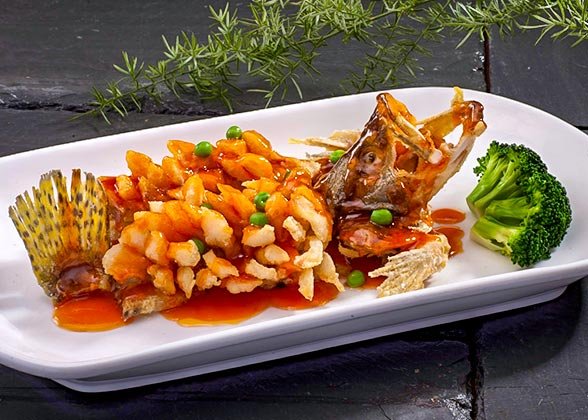 | | Squirrel-shaped Mandarin Fish | | 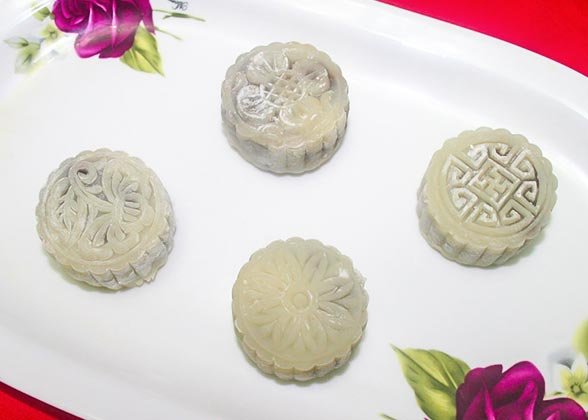 | | Suzhou Pastries | |
Culture
Suzhou has a profound historical and cultural heritage and has been awarded the title of “Cultural City of East Asia”. It not only preserves large-scale intact ancient architectural complexes as tangible cultural heritage, but also nurtures rich intangible cultural heritage such as
Kunqu Opera and Suzhou Embroidery. Kun Opera is one of the oldest traditional Chinese operas, combining singing, recitation, acting, dancing, as well as martial arts. It is renowned for its elegant lyrics, graceful singing style, and delicate performances. In the costumes of Kun Opera performances, the marks of Suzhou Embroidery can be seen everywhere, which even reveals the personality traits of different characters from its stitches and threads.
The tea culture in Suzhou is also very long-standing. There are many quaint tea houses in the streets and alleys. For the people of Suzhou who prefer a slow pace of life, brewing and enjoying the tea has become an integral part of their lives. If you are tired from journey, you can walk into a tea house, watch the tea artists demonstrate traditional tea-making techniques, and savor the soothing and refreshing aroma of the tea.
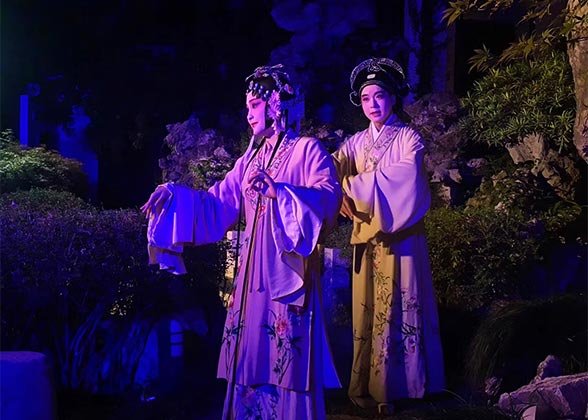 | | Kunqu Opera | | 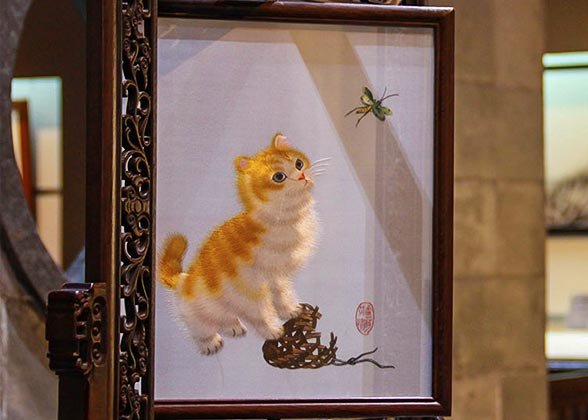 | | Suzhou Embroidery | |
Read more:
Suzhou History The shopping experience in Suzhou perfectly matches its local charm. This historical water town is rich in exquisite traditional handicrafts, such as silk scarves, double-sided embroidered fans, sandalwood folding fans, walnut carvings, and Taohuawu Woodcut New Year Paintings. These are all representatives of ingenious southern Chinese craftsmanship. Whether you want to buy them as souvenirs or as gifts for your friends or family, it’s perfectly suitable.
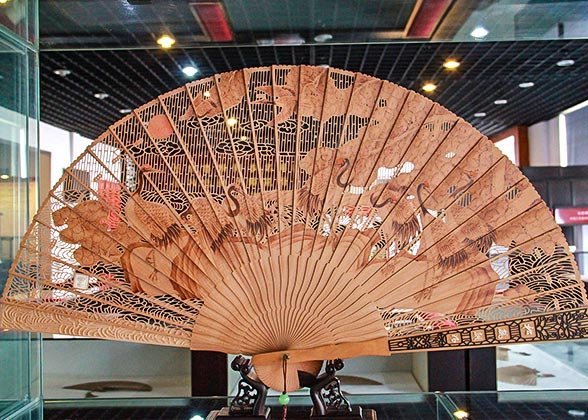 | | Sandalwood Folding Fan | | 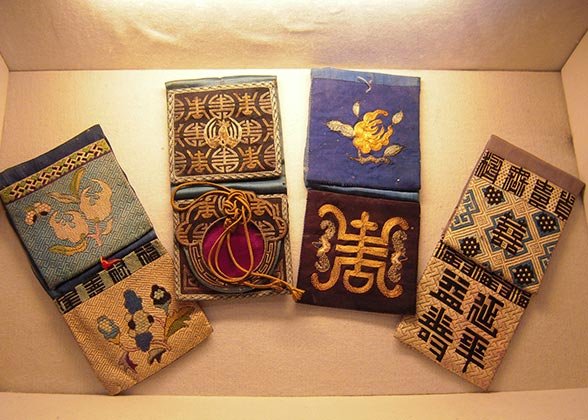 | | Suzhou Handcraft | |
You may also like: 8 Things to Do in Suzhou at Night
- Last updated on Aug. 14, 2026 by Shelly Wang -